Should Retirees Worry About the $500 Billion AI Data Center Financing Boom?
By Tom Dupree, Founder, Dupree Financial Group — with Mike Johnson, James Dupree, and Michael Dawahare, as discussed on The Financial Hour, August 15, 2026.
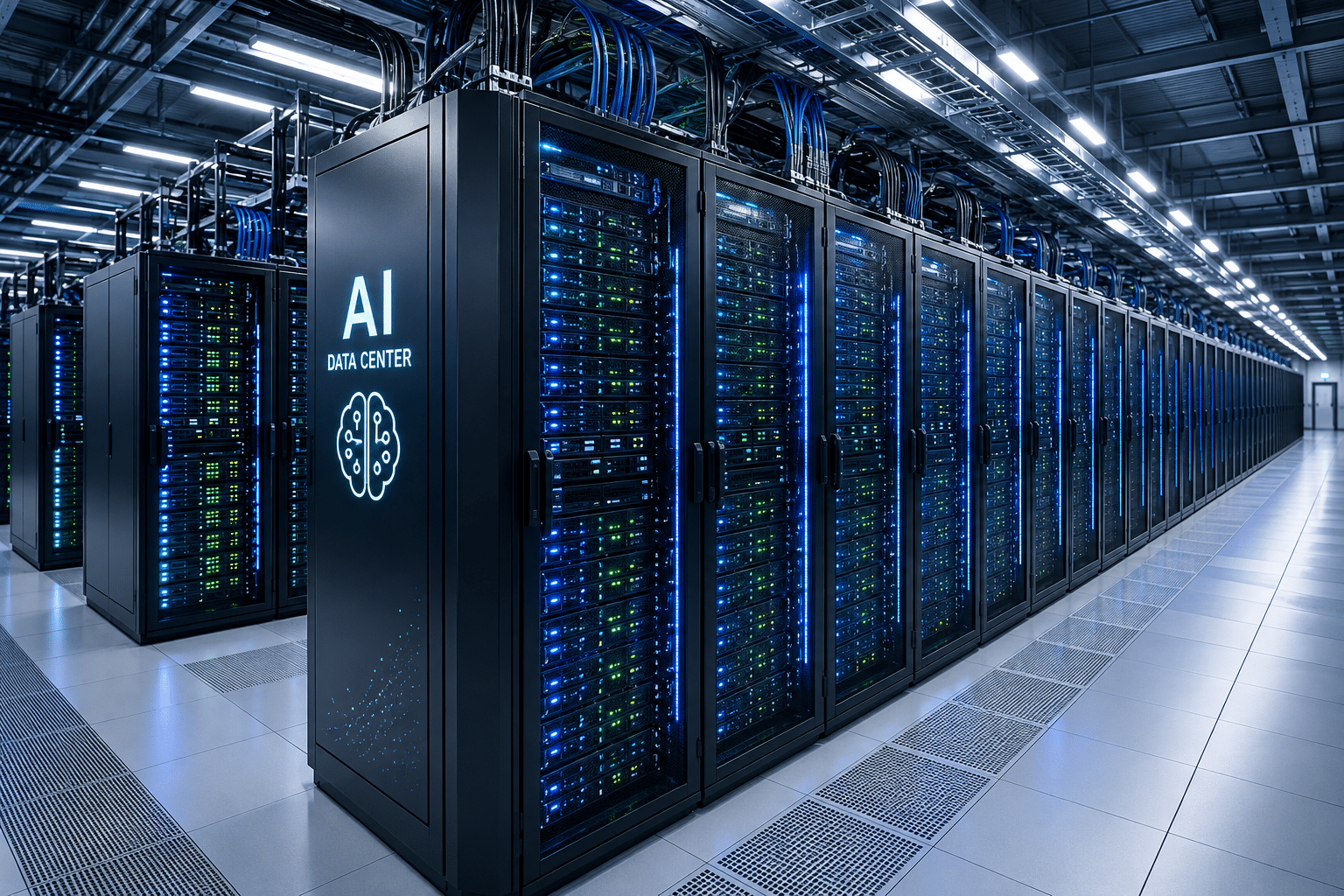 Wall Street wants to finance roughly $500 billion of AI data center construction by turning computer chips into asset-backed securities — the same financing tool that has funded mortgages, auto loans, and credit card debt for decades. On this week’s Financial Hour, Tom called it, in his words, “a huge boondoggle.” Michael Dawahare pushed back with a more measured read. Mike Johnson and James Dupree pressed both sides on what’s actually driving the deal.
The short answer: Dupree Financial Group doesn’t currently hold this type of security in client portfolios, and doesn’t recommend chasing the headline. The more useful question for a retiree isn’t whether AI is real — it obviously is. It’s what’s actually backing $500 billion in new debt, and what happens to that collateral if the technology moves faster than the loan gets paid off.
Key Takeaways
- A group of major financial firms — Apollo, BlackRock, Blackstone, Brookfield, Goldman Sachs, and KKR — is exploring asset-backed securities to help finance AI data center buildout.
- The debt would be backed largely by Nvidia chips inside “NeoCloud” companies like CoreWeave and Nebius Group, not by traditional collateral like real estate or receivables.
- Dupree Financial Group owns mortgage-backed securities but avoids auto-loan- and credit-card-backed debt, because the underlying collateral in those cases isn’t reliably recoverable — the same lens the firm applies here.
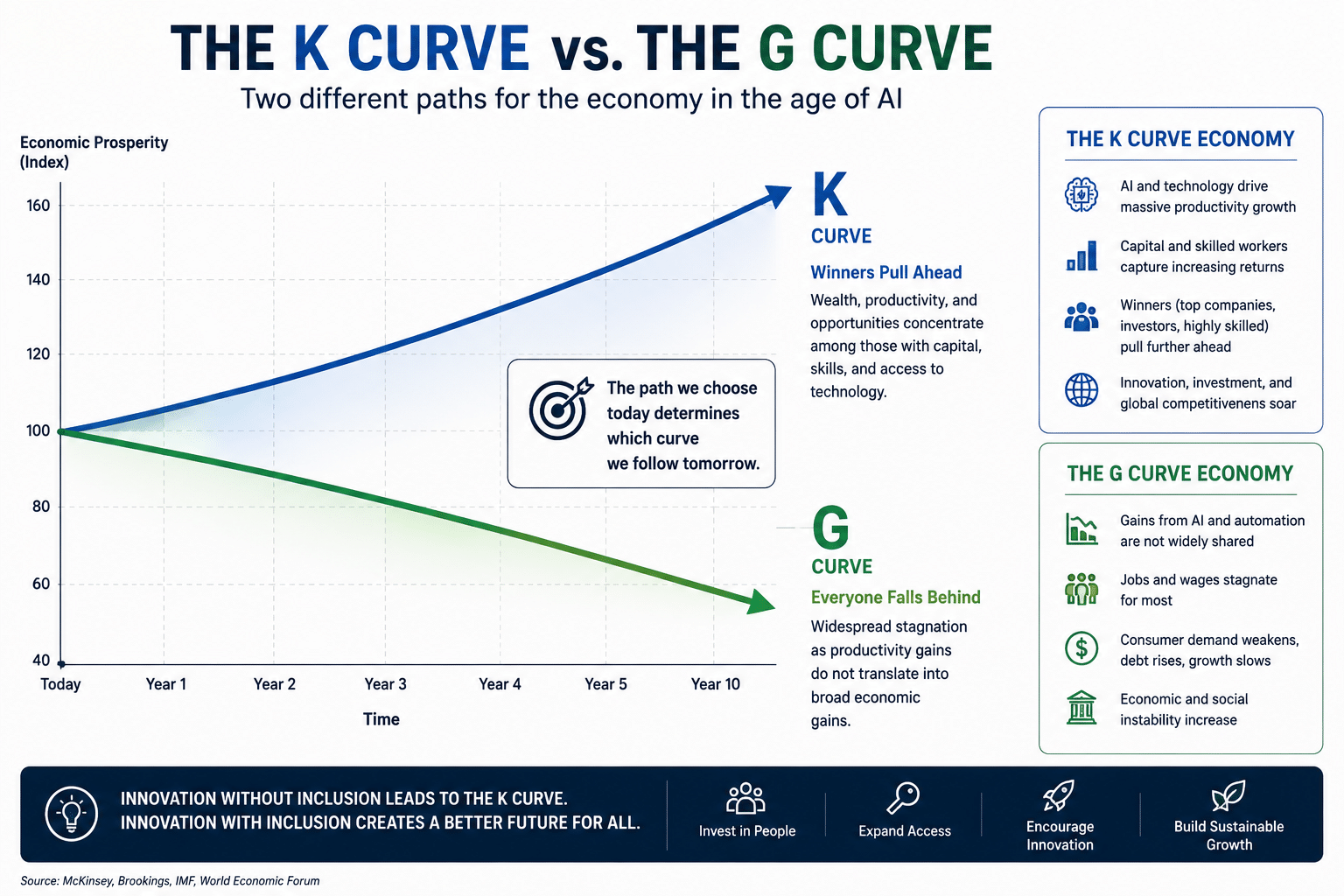
- Separately, wage data suggests the economy may be shifting from a “K-shaped” pattern (higher earners pulling ahead) toward a broader, more generationally distributed “G-shaped” recovery.
- Tom’s own investment philosophy traces back to the 1990s, when he noticed dividend-paying stocks beginning to outperform bonds — the observation that still anchors how DFG builds retirement income today.
Why This Is Hard to Evaluate From a Headline
If you’ve read a headline about a “$500 billion AI financing deal” and felt your stomach tighten a little, that’s a reasonable reaction. Financial engineering stories are genuinely hard to evaluate from the outside. The vocabulary is dense — asset-backed securities, securitization, collateral, inference — and the stakes described in the coverage are enormous. Retirees have been burned before by financial products that sounded sophisticated and turned out to be thinly disguised risk, and that memory is not paranoia. It’s earned caution.
The team didn’t pretend this was simple. Tom was candid about his own uncertainty, noting he’s “very willing to be corrected.” That kind of honesty — admitting a strong opinion isn’t the same as certainty — is itself part of how DFG evaluates a new trend: skepticism first, conclusions only after the mechanics are understood.
What the Team Actually Discussed
A NeoCloud company buys Nvidia chips, builds computing capacity, and rents that capacity to larger technology firms like Amazon or Meta. CoreWeave and Nebius Group are two examples the team named. The pitch from the AI industry is that even older-generation chips retain real value for years, through a secondary use called inference — essentially, running smaller, less demanding AI tasks on hardware that’s no longer cutting-edge. Bears on the other side of the argument worry the technology cycle will outrun the debt: if a chip is functionally obsolete before the loan backing it is paid off, the “asset” behind the asset-backed security stops backing much of anything.
This is precisely the distinction DFG applies to every asset-backed security it considers. The firm holds mortgage-backed securities, which are backed by real property with a long, well-understood history of collateral value. It does not hold auto-loan- or credit-card-backed debt, because a depreciating car or an unsecured promise to pay doesn’t offer the same reliability. Asset-backed securities as a category aren’t inherently good or bad — the question is always what’s underneath.
The team also placed the moment in historical context. Financing efforts without a clean precedent aren’t new: the Panama Canal and the Marshall Plan were both undertaken without a perfect playbook, and both eventually found their footing, even though the people funding them at the outset couldn’t have described exactly how. That’s not a guarantee this AI financing structure works out the same way — it’s a reminder that markets have absorbed genuinely novel financing before, and that every investment bank, underwriter, and rating agency involved here has its own incentive to get the structure right.
Separately, the conversation turned to what’s actually showing up in the economic data. For the past few years, economists have described a “K-shaped” economy, where higher earners pulled ahead while lower-income households absorbed the brunt of inflation. According to recent wage data, that gap may be narrowing — wage growth for lower-income workers has recently outpaced higher earners, a shift the team tied in part to immigration policy changes affecting labor supply and rental housing demand. Some economists are now describing this broader, more generationally distributed pattern — retiring baby boomers spending freely alongside improving wages further down the income scale — as a “G-shaped” economy.
DFG’s Reframe: The Three-Question Collateral Test
Strip away the jargon, and The Dupree Team’s approach to any asset-backed security — mortgage bonds, auto loans, or AI chip debt — comes down to three questions Tom has asked in one form or another for 48 years:
- What actually generates the cash flow? Not the marketing story — the mechanism. A mortgage generates cash flow because someone lives in the house and needs to keep paying. What generates cash flow from a chip?
- What happens to the collateral if the cash flow stops? A house retains value. A car depreciates fast. A three-year-old computer chip in a five-year technology cycle may retain very little.
- Am I being paid enough to take this risk, or am I just hoping? Yield that doesn’t reflect the real uncertainty in the collateral isn’t a bargain — it’s a warning sign.
This isn’t a formal framework DFG has branded or trademarked — it’s the plain-English version of “know what you own and why you own it,” the same standard Tom applies whether he’s looking at a dividend stock, a municipal bond, or a headline-grabbing new security structure. It’s also why the firm’s answer to the AI financing question isn’t a prediction about who’s right. It’s a description of the test the investment has to pass before it’s even a candidate for a client account.
How This Shows Up in a DFG Retirement Portfolio
None of this changes DFG’s core approach to retirement income, which was built on a much older observation. Tom started his career selling municipal bonds in the late 1970s. In the 1990s, he began noticing something that reshaped how he thought about money for the next three decades: dividend-paying stocks were, in some cases, outperforming bonds. As he’s put it: “Stocks with dividends were, in some cases, outperforming bonds. That changed everything for me. It’s all about return on your money, whether it’s a stock or a bond.”
That’s the foundation DFG still builds on — pairing dividend-paying stocks with bonds so retirement income shows up as visible cash flow, not a number on a statement you hope holds up. It’s also why the firm’s research process for something like an AI-driven “picks and shovels” business (a company that profits from building the infrastructure, rather than betting on which AI model wins) still runs through the same cash-flow lens as everything else in a client’s account. Direct ownership of individual securities, in-house research, and no reliance on a fund manager’s black box — that discipline doesn’t change just because the headline is about a new technology.
Five Steps to Evaluate Any Headline-Driven Investment Trend
- Identify the actual cash flow. Before anything else, ask what specifically generates the return — a mechanism, not a narrative. If you can’t describe it in one sentence, that’s worth noticing.
- Ask what’s collateral, and what happens to it under stress. Real estate, receivables, and dividend-paying businesses all have a track record. Newer categories of collateral don’t, yet.
- Check whether the yield matches the real risk. A return that looks unusually attractive for the stated risk level is a reason to look closer, not a reason to move faster.
- Separate the technology story from the investment structure. AI adoption and the specific debt used to finance AI infrastructure are two different questions. One can be real and durable while the other is poorly structured.
- Ask a fee-only fiduciary to walk through your own portfolio. If you’re not sure whether something like this is already inside a fund or account you own, that’s exactly what a portfolio review is for.
What the Data Actually Shows
For context on the broader economy: for the past few years, the story was a K-shaped one — higher earners pulling further ahead while lower-income households bore the weight of inflation. That pattern appears to be shifting. Recent wage data shows lower-income wage growth outpacing higher earners, a change the team connected in part to tighter labor supply following immigration policy changes, which has also shown up as flatter rental housing costs in some markets. None of this is a forecast about where markets go next — it’s the kind of context Tom has built a career on gathering before deciding what belongs in a retirement portfolio.
 Frequently Asked Questions
 Frequently Asked Questions
What is an asset-backed security?
An asset-backed security is a bond backed by a pool of assets, like auto loans, credit card debt, or mortgages, rather than a company’s general credit. Investors are repaid from the cash flow those underlying assets generate. Wall Street is now exploring this structure to help finance AI data center buildout.
What is a NeoCloud company?
A NeoCloud is a company that buys Nvidia chips, builds computing infrastructure, and rents that capacity to larger technology firms. Companies such as CoreWeave and Nebius Group are examples discussed on The Financial Hour as part of the broader AI infrastructure buildout.
Should retirees be worried about the AI data center financing boom?
Dupree Financial Group’s view is measured skepticism, not alarm. The firm does not currently hold this type of security in client portfolios. As with any headline-driven trend, the firm’s approach is to understand exactly what backs an investment before it belongs in a retirement portfolio.
What is the difference between a K-shaped and G-shaped economy?
A K-shaped economy describes higher earners pulling ahead while lower earners fall behind. A G-shaped economy, a newer term discussed on the show, points to more generationally and broadly distributed gains, including wage growth for lower-income workers recently outpacing higher earners.
Why does Dupree Financial Group favor dividend-paying stocks for retirement income?
Founder Tom Dupree began his career selling bonds in the late 1970s and, in the 1990s, noticed that dividend-paying stocks were in some cases outperforming bonds. That observation shaped DFG’s approach of pairing dividend growth stocks with bonds to generate income retirees can see and rely on.
The Bottom Line
A $500 billion number is designed to grab attention, and it did its job. But the number itself isn’t the risk — the collateral is. Whether this particular financing structure holds up will play out over years, not headlines, and the market’s own sophistication, imperfect as it is, has a real track record of surfacing trouble before it becomes catastrophic. What doesn’t change, regardless of how this specific bet resolves, is the standard Tom has applied for 48 years: know what generates the cash flow, know what backs it, and don’t confuse a compelling story for an understood investment.
As Tom put it plainly on air: “We’re not a part of Wall Street. Wall Street is buying and selling for a profit. We sit back and watch.”
Keep Learning
- AI Investment Strategies vs. Traditional Portfolio Management — why DFG separates durable AI-driven businesses from speculative ones.
- How Market Volatility and Geopolitical Risk Affect Your Retirement Portfolio — why reacting to headlines isn’t a strategy.
- Why You Need to Know What You Own — the philosophy behind DFG’s approach to portfolio transparency.
About Tom Dupree
Tom Dupree is the founder of Dupree Financial Group, a fee-only, fiduciary Registered Investment Advisory firm based in Lexington, Kentucky. He has worked in the investment business for 48 years, beginning as a municipal bond salesman in the late 1970s, and hosts The Financial Hour of the Tom Dupree Show alongside Mike Johnson, James Dupree, and Michael Dawahare. Dupree Financial Group manages separately managed accounts focused on income-generating, dividend-paying portfolios — no products sold, no commissions, no conflicts of interest.
All investing involves risk, including the possible loss of principal. Historical events and market comparisons discussed in this article are for educational context only and are not a guarantee of future results. Mentions of specific companies, funds, or firms are for informational purposes and do not constitute a recommendation to buy or sell any security.
Schedule a Complimentary Portfolio Review
If a headline about a $500 billion financing deal makes you wonder what’s actually inside your own portfolio, that’s exactly the conversation Tom and the team would like to have with you. A complimentary portfolio review is a no-cost, no-pressure way to see what you own, why you own it, and whether it still fits where you are today.
Call: 859-233-0400 | Visit: dupreefinancial.com
Dupree Financial Group is a Registered Investment Advisor (RIA) registered with the Securities and Exchange Commission. Registration does not imply a certain level of skill or training. The information presented on this program is for educational purposes only and does not constitute investment advice, a solicitation, or a recommendation to buy or sell any security. Investing involves risk, including the potential loss of principal. Past performance is not indicative of future results. Please consult with a qualified financial advisor before making any investment decisions.